
Does Your Business Need Fixed Wireless Access?
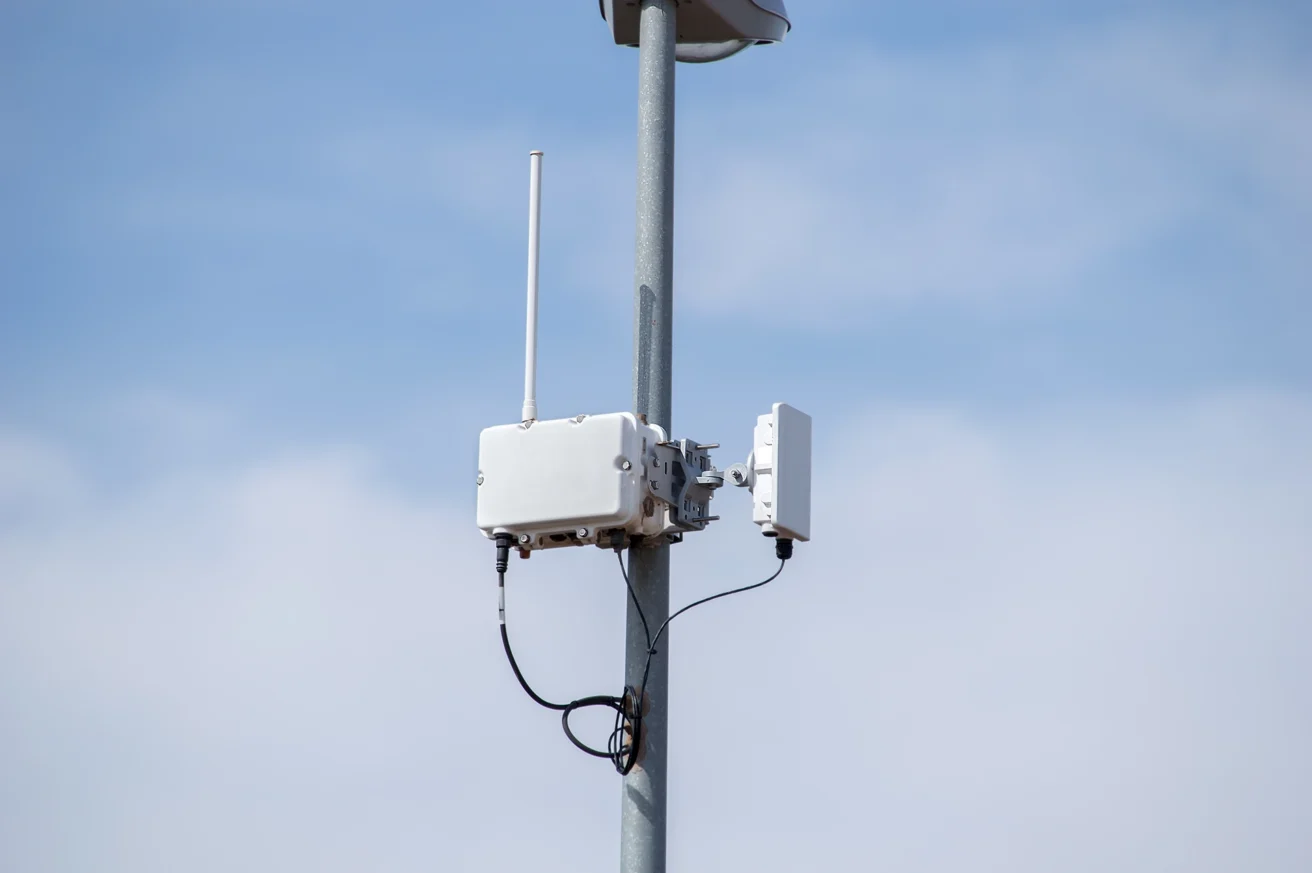
Connectivity decisions used to be simple. You ordered fiber, waited for installation, and built your operations around it. Today, that model does not always hold up.
As businesses expand into new locations, rely more heavily on cloud-based systems, and operate on tighter timelines, Fixed Wireless Access (FWA) has become a serious part of modern connectivity strategies. It is increasingly used to solve real-world challenges that traditional wired connections cannot always address.
The better question is not whether FWA is good or bad, but whether it fits your environment, your applications, and your tolerance for downtime.
This guide is designed to help you answer that question.
What Is Fixed Wireless Access (FWA)?
Fixed Wireless Access delivers last-mile internet connectivity using cellular or licensed wireless networks instead of physical cables like fiber or coax. Rather than trenching infrastructure to a site, data is transmitted wirelessly from nearby carrier equipment to a fixed location.
At a practical level:
- Fiber and cable rely on physical infrastructure
- FWA relies on wireless links over cellular or licensed spectrum
- Traditional LTE hotspots are mobile and best-effort
- FWA is designed for fixed sites with more consistent performance expectations
Performance varies based on carrier coverage, spectrum availability, signal quality, and network design. When deployed correctly, FWA can deliver reliable broadband suitable for many business applications without the long lead times or construction costs of wired circuits.
Why Businesses Are Considering FWA Now
Fixed Wireless Access is not new, but how businesses use it has changed.
Fiber installation delays are common, especially for new builds, rural locations, and temporary sites. In many cases, the cost and timeline simply do not align with how quickly businesses need to move.
At the same time, operations are increasingly dependent on cloud platforms, SaaS tools, remote access, and centralized systems. Connectivity now plays a direct role in productivity, visibility, and uptime.
Carrier ecosystems have also matured. Multi-network cellular and greater carrier diversity allow wireless connectivity to be designed with resilience in mind instead of being tied to a single provider.
Finally, many locations today are not permanent. Construction projects, pilot programs, seasonal operations, and expanding footprints require connectivity that can be deployed quickly and adjusted as conditions change.
Common Business Use Cases for FWA
Fixed Wireless Access is most commonly deployed where speed and flexibility matter.
Some organizations use FWA as primary connectivity when fiber is unavailable or impractical. Others deploy it as backup connectivity to keep operations online during wired outages.
FWA is also well-suited for rapid deployment, allowing new or temporary locations to come online in days instead of months.
Industries operating in remote or hard-to-reach environments, including energy, construction, and logistics, often rely on FWA to bridge connectivity gaps. Seasonal or pop-up operations benefit from avoiding permanent infrastructure altogether.

Signs Your Business May Need Fixed Wireless Access
Several common scenarios tend to signal that FWA is worth evaluating.
Long lead times or high costs for wired circuits are an obvious trigger. Another is reliance on a single carrier or connection type, which can introduce unnecessary outage risk.
Frequent downtime that disrupts operations, safety, or revenue is another indicator. So is a network footprint that changes often due to growth, mobility, or temporary sites.
In many cases, urgency is the deciding factor. When reliable connectivity is needed in days rather than months, Fixed Wireless Access becomes a practical option.
When FWA May Not Be the Right Fit
FWA is not the right solution for every environment.
Applications that require ultra-low latency or strictly deterministic bandwidth may still require private or dedicated infrastructure. Extremely high, sustained throughput demands can also exceed what wireless access is designed to support.
Some locations lack sufficient cellular signal, and not every deployment allows for mitigation through antennas or carrier diversity. Certain compliance or regulatory requirements may also necessitate fully private networks.
Understanding where FWA does not work is just as important as understanding where it does.
Key Questions to Ask Before Choosing FWA
Before adding Fixed Wireless Access to your network, it helps to ask the right questions.
Is FWA intended to be primary, secondary, or tertiary connectivity? What uptime expectations exist, and how critical is this site to daily operations?
Carrier redundancy matters. A single-carrier wireless connection can introduce the same risks as a single wired circuit.
Security and traffic management should also be considered. How will traffic be prioritized? What happens if performance degrades? How quickly can you adapt?
The answers to these questions determine whether FWA strengthens your network or simply shifts risk elsewhere.
FWA Works Best as Part of a Hybrid Strategy
In practice, Fixed Wireless Access delivers the most value when it is part of a broader network design.
Hybrid architectures combine fiber, cable, MPLS, and wireless connectivity to balance performance, cost, and resilience. Multi-network SIMs and intelligent failover allow traffic to shift automatically when conditions change.
Centralized monitoring and management bring these connections together, giving teams visibility and control across all sites instead of managing each link in isolation.
How Solve Networks Approaches Fixed Wireless Access
At Solve Networks, Fixed Wireless Access is treated as one component of a broader connectivity strategy, not a one-size-fits-all solution.
Solve designs carrier-agnostic, multi-network architectures focused on resilience and real-world performance. FWA is evaluated alongside wired, cellular, and satellite options to determine where it fits best based on environment, application requirements, and risk tolerance.
The goal is not just to get sites online. It is to keep them online when conditions change.
Final Takeaway
Fixed Wireless Access is not right for every business. But for the right use cases, it is increasingly essential.
The real question is not whether FWA can work.
It is where it belongs in your network strategy.
If you are evaluating Fixed Wireless Access as part of a broader connectivity plan, Solve Networks helps you move beyond what is available and toward what actually works.

Push vs. Pull SCADA: The Impact on Cellular Networks
Identifying the Problem As industrial IoT deployments become more widespread, many organizations are finding that legacy SCADA (Supervisory Control and Data Acquisition) applications don’t always transition smoothly to these new environments, especially when using metered cellular uplinks. Traditional SCADA systems typically rely on polling methodologies, which can be both process inefficient and data heavy. In […]

Simplify Your IoT Connectivity with the Solve Multi-Network SIM
Identifying the Problem For businesses deploying IoT solutions across the United States, reliable and extensive cellular coverage is essential for operation. However, ensuring comprehensive coverage with any single U.S. carrier can be a daunting task. This often results in a complex cellular connectivity strategy involving multiple carrier relationships, multiple SIM cards per device, logistics, site […]

Public IP vs. Private IP Addresses and Utilizing Solve Networks VPN
Identifying the Problem In today’s digital landscape, many customers still rely on legacy applications and deployments that utilize cellular SIM cards provisioned with public static IP addresses. These addresses can be communicated directly to by the entire Internet, creating significant security risks and potential data usage issues if not properly secured. Since SIM cards operate […]