How to Manage SIM Access in Your Connectivity Platform
A device goes missing at a remote well site. The SIM is still active. So who’s on your network right now?
In industrial IoT, connectivity is mission-critical—but so is the ability to cut it off fast when something goes wrong. Every active SIM can be an open door to your network. Most of the time, that’s exactly what you want—your devices securely talking to your application. But when a device goes dark, gets stolen, starts behaving strangely, or simply reaches the end of its useful life, that open door can become a liability.
The good news: you don’t need to call your carrier, submit a ticket, or wait on hold. If you’re managing your fleet through Solve’s Clarity Connectivity Management™ platform, you have the tools to act in seconds.
This guide will walk you through how SIM barring and unbarring works inside CCM, when to use it, and why making it part of your standard operating procedure is one of the simplest things you can do to protect your industrial network.
What Does “Barring” a SIM Mean?
SIM cards move through a lifecycle: Active, Barred, and Terminated. Understanding the difference between the latter two matters.
When you “Bar” a SIM, you’re temporarily suspending its access to the network. The device loses connectivity immediately, meaning no data transfers in or out. But the SIM itself isn’t gone. It stays visible in your dashboard, your audit history is intact, and the configuration you’ve set up is preserved. Barring a SIM is reversible—you can restore access as quickly as you cut it off.
Termination is permanent. Once a SIM is terminated, it can’t be reactivated.
When Should You Bar a SIM?
There’s no single reason to bar a SIM—but below are four really good ones.
Lost or Stolen Device
This is the fastest reason to act. If a device is unaccounted for at a remote site, every minute it stays active is potential exposure. Bar the SIM first, investigate second. You can always unbar it if the device turns up.
Suspicious or Anomalous Usage
Unexpected data spikes. Unusual connection locations. Off-hours activity on a device that should be dormant. CCM’s alerting gives you the signal—barring gives you the response. Don’t wait to understand the full picture before you act; limit the exposure while you investigate.
Device Decommissioning
At the end of a project, during equipment retirement, or when prepping a device for redeployment, bar the SIM first. This buys you time before committing to a full termination, which is useful when you’re not entirely sure the device won’t be repurposed down the line.
How to Bar a SIM in Solve’s CCM Platform
This process takes about 30 seconds. Here’s exactly how to do it.
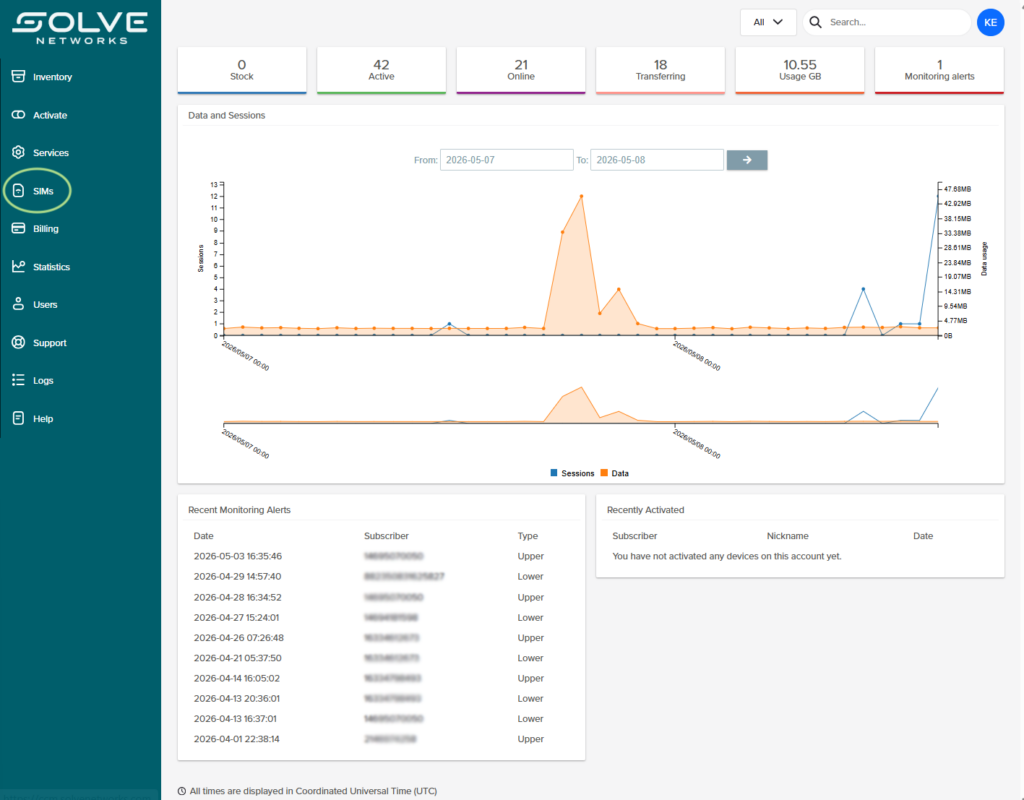
Step 1: Log into your CCM account and navigate to the SIM Management section.
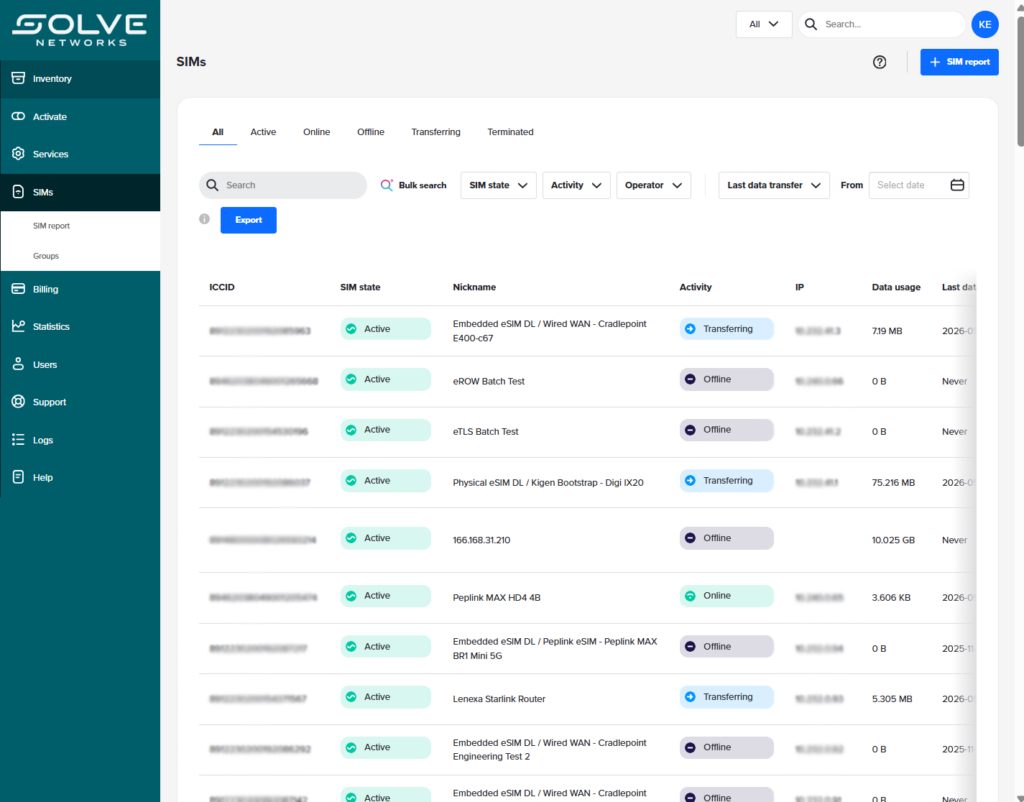
Step 2: Locate the SIM you want to bar. You can search by SIM number, device name, or ICCID.
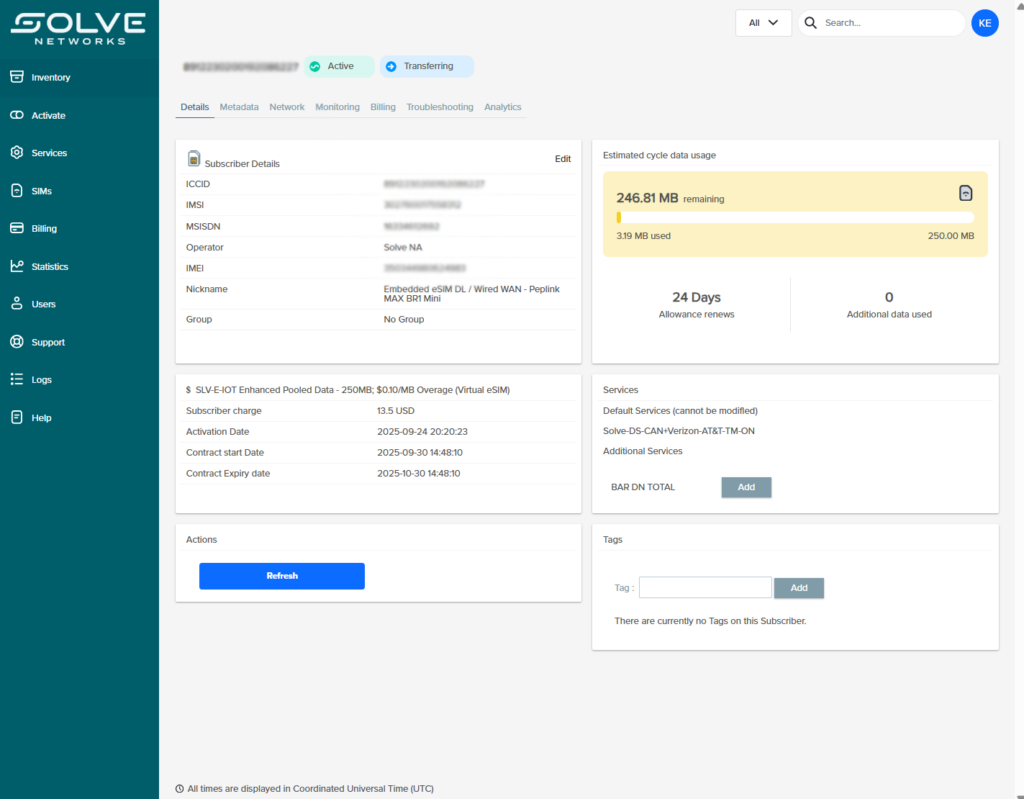
Step 3: Open the SIM’s detail view and select the “Bar” or “Suspend” action.
Step 4: Confirm the action. The SIM status will update to Barred immediately.
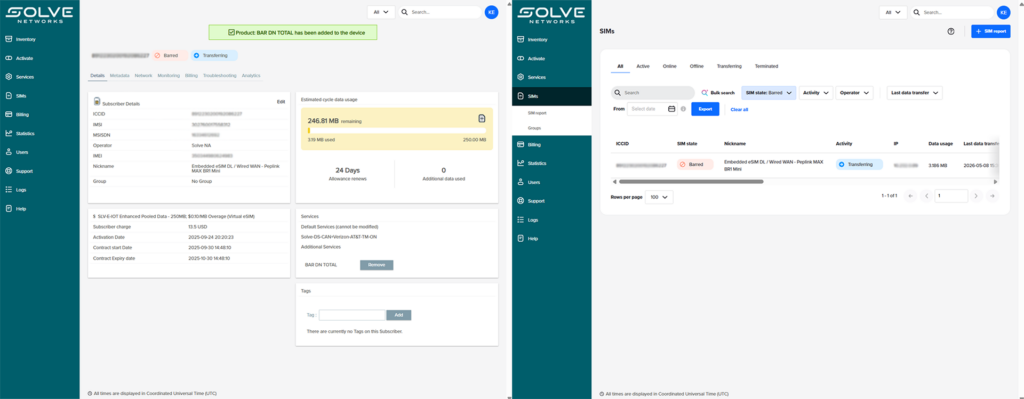
The change takes effect at the network level within seconds. The device will lose connectivity immediately upon barring.
Managing a large fleet? Clarity supports bulk barring for operators who need to act on multiple SIMs at once.
How to Unbar a SIM and Restore Access
Unbarring follows the same process in reverse. Navigate to the barred SIM in your dashboard, select the “Unbar” or “Restore” action, and confirm.
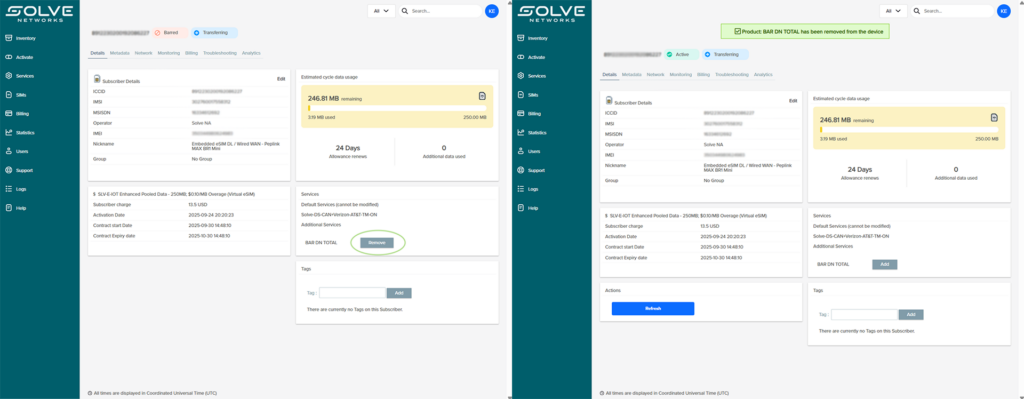
No new SIM required. No call to the carrier. No waiting. Access is restored at the network level within seconds, and you can confirm reconnection directly in the dashboard.
This is what “self-managed, Solve-supported” looks like in practice. The control is yours. And if you do run into anything unexpected, we’re a call away.
Barring as Ongoing Security, Not Just an Emergency Response
The ability to bar a SIM quickly is valuable in a crisis. But the operators who get the most out of it are the ones who treat it as a standard practice, not just a break-glass option.
Here’s why this matters: unmanaged SIMs are a silent attack surface. In a zero-trust security model, every device (not just every user) should be treated as a potential threat vector until it’s verified. An active SIM on a device you’re no longer tracking is exactly the kind of gap that sophisticated attackers look for in industrial environments.
Industrial networks are increasingly targeted. OT environments that were once air-gapped are now connected, and the same cellular infrastructure that makes remote monitoring possible also creates new exposure if it isn’t managed carefully. Regulatory frameworks like NERC CIP already reflect this reality for utilities and energy operators, and the broader industrial sector is trending in the same direction.
Beyond security, there’s a compliance dimension worth noting: CCM’s audit trail logs every SIM state change with a timestamp. If you ever need to demonstrate that you acted quickly after detecting a problem, that record is already there.
Solve’s secure network infrastructure positioning isn’t just about what we build on the back end. It’s about giving you the tools to manage your own network security posture in real time.
Making This a Habit, Not Just a Feature
Fast, reversible, auditable SIM control is table stakes for any serious industrial IoT operation. The capability is there—the question is whether you’re using it.
A few habits worth building into your standard operating procedure:
- Review your active SIM list quarterly. Anything that hasn’t connected in 90 days is worth a look.
- Bar before you terminate. It costs nothing and gives you a recovery window if you change your mind.
- Treat anomalous usage alerts as bar-first situations. Investigate while the door is closed, not while it’s open.
Questions about Solve’s Clarity Connectivity Management™ platform or how we manage SIM access for your fleet? Just reach out here!