What Most People Get Wrong About MVNOs (And Why It Costs Them)
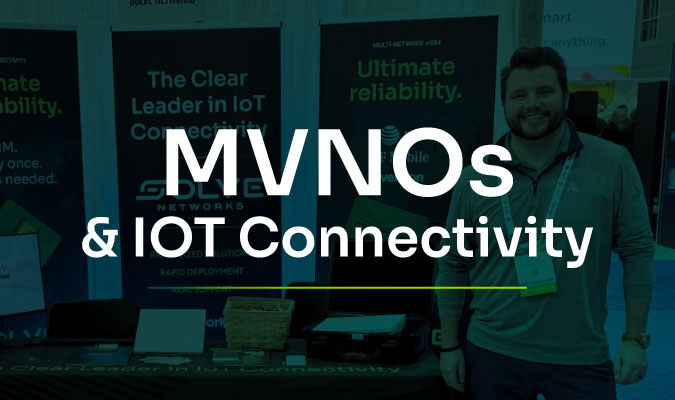
Michael Crayton, National Sales Account Manager
Most people have the wrong idea about what a Mobile Virtual Network Operator actually does. I hear it constantly: an MVNO just buys data from a major carrier, slaps a markup on it, and hands it back to you. If that were true, there’d be no reason to work with one.
That’s not what we do at Solve Networks.
We’re Building, Not Reselling
When a new customer comes to us, they’re usually coming from a provider that could only give them a single network connection at a time. But one carrier = one point of failure. In industrial environments, that’s not a risk worth taking.
What Solve delivers is a fundamentally different connectivity architecture. Our Multi-Network SIM connects to all three major carriers simultaneously, so if one goes down, your devices won’t. We also build out secure remote access architectures and private networks that would take another provider weeks or months to stand up—and it takes us a few days.
The Knowledge Gap Nobody Talks About
Here’s the thing about going directly to a major carrier for industrial IoT connectivity: they don’t know what a PLC is. They don’t know what a SCADA system is. They’re not going to walk onto your site and understand what your operation actually needs. They’re going to sell you a data plan.
My start in this industry was at an industrial communications distributor—cellular routers, cellular gateways, the nuts and bolts of how cellular technology actually supports industrial applications. That background is what drew me to Solve Networks in the first place, and it’s what the whole team brings to the table. You’re just not going to find that level of knowledge where most companies are purchasing their connectivity today.
That expertise is the difference between a connectivity partner and a connectivity vendor.
From Chaos to Clarity: A Real Customer Story
A recent customer came to us with a fleet of satellite terminals scattered across their field operations. Each terminal was running on a separate residential plan. Individual technicians were paying for connectivity out of their own pockets, on their own credit cards, with no centralized visibility into usage, cost, or who was actually responsible for what. There was no single pane of glass, no coherent billing structure, and no way to know at a glance whether every terminal in the field was actually online and accounted for.
It was, in short, unmanaged chaos (which is more common than you think).
Within about a week, we transferred all of their lines of service into a single managed account, consolidated everything into one management platform, and gave them one clean source for payment and procurement. What had been a sprawling, uncontrolled mess became a transparent, accountable system. The customer didn’t just get better connectivity—they got control.
Solve Networks: Scalable, Secure, Adaptable
If I had to describe Solve in three words, I’d say scalable, secure, and adaptive.
Scalable because whether you need 10 SIMs or 10,000, we can make that happen.
Secure because we’re helping customers build better, safer systems—not just connecting them and walking away.
Adaptive because we’re a small enough organization to actually handle big problems that the larger carriers and network operators just can’t.
The secure network infrastructure we build for customers isn’t a feature add-on. For industries where downtime and data exposure carry real consequences, it’s the foundation.
The Data Problem Nobody’s Solved Yet
The data demands on industrial operations are only going to grow. There are more data points to collect from in the field today than ever before, and that number isn’t going down. The challenge for most industrial operators isn’t generating data, it’s moving it securely from the edge into an environment where it can actually be put to good use. The companies that figure out a secure, reliable architecture for doing that now are going to have a significant advantage over the ones still sorting it out in two or three years.
That’s the conversation we’re having with customers every day. And it’s why connectivity strategy (not just connectivity purchasing) matters more now than it ever has.
At the end of the day, what I want people to understand about Solve Networks is that we show up to work with your team’s goals in mind. That’s not something you get from a carrier or a company that sees you as an account number. If you’re evaluating your industrial connectivity and want to understand what the right solution actually looks like for your operation, let’s talk!
About the Author: Meet Michael Crayton

Michael Crayton is the National Sales Account Manager at Solve Networks, where he’s responsible for bringing in new business and making sure customers are getting the most out of their connectivity. He came to Solve after starting his career at an industrial communications distributor, where he built a hands-on foundation in cellular routers, gateways, and how cellular technology supports real-world industrial applications.
Outside of work, Michael is a hockey referee, an avid traveler, and a self-described enthusiast of trying new restaurants. He holds a degree in political science and — in another life — would have gone to law school.