Bonded, Not Bottlenecked: How One Oilfield Fleet Solved Its Data Problem
Keri Gunther, General Manager
Out in the field, a wireline service provider’s trucks don’t have the luxury of a fixed address — they go where the wellhead is. That reality shaped everything about how we built connectivity for one of our longtime customers.
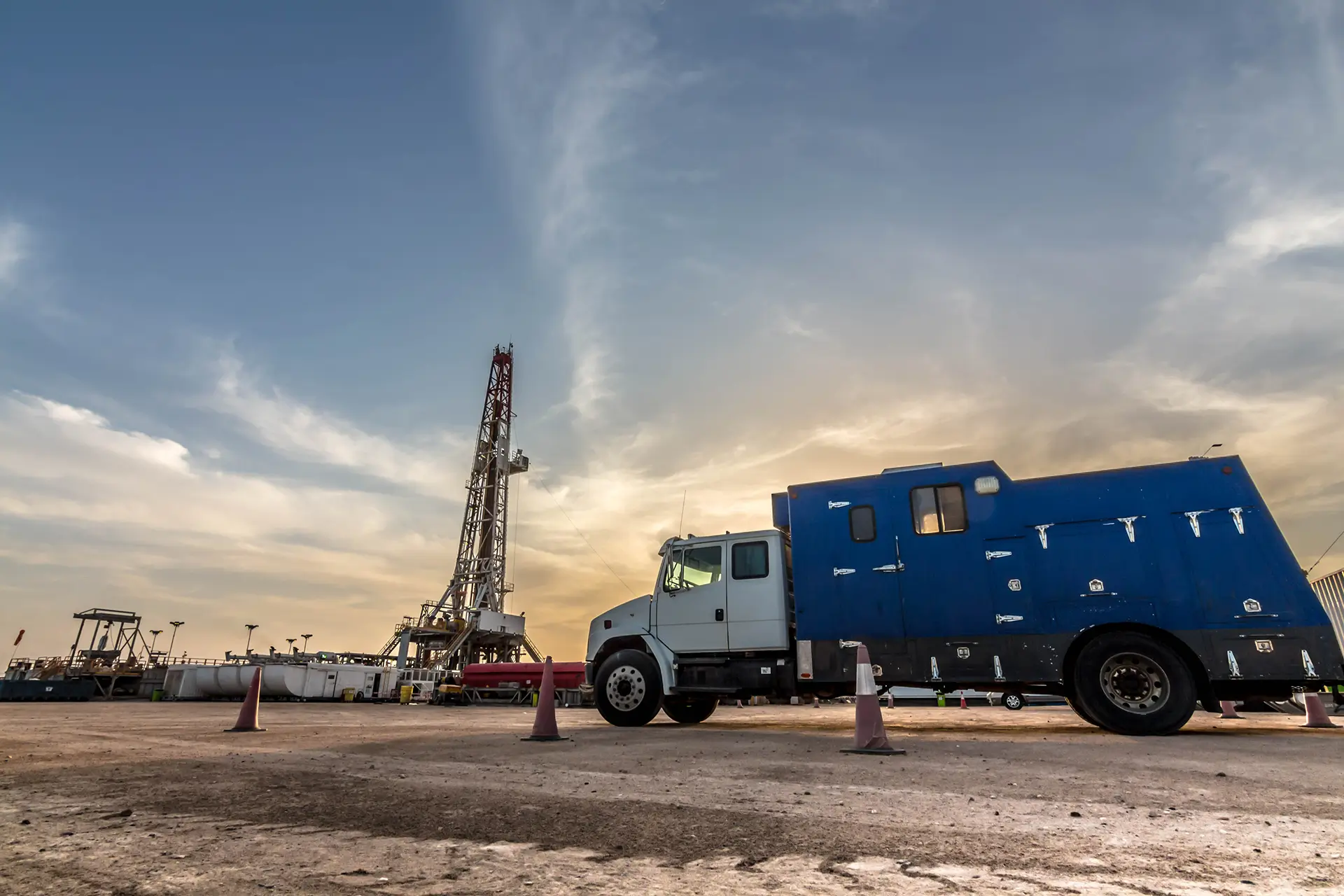
This customer runs a mobile fleet of wireline trucks that service equipment at wellheads across the country, and their connectivity needs were straightforward: stay online, stay fast. Solve kept them connected with a dual-SIM setup, bonding two primary cellular carriers together for the fastest possible connection a cellular-only approach could offer.
Then, their business changed.
The Challenge: Cellular Alone Couldn’t Keep Up
Their customers started asking for more — AI-driven insights, video feeds, and other advanced applications layered on top of the core cellular network. While that was good news for the business, it was a challenge for the network.
Each one of those new applications meant more data and more speed, more often, and the trucks were already leaning on cellular as much as possible. Scaling up that kind of data consumption purely over cellular, in some of the most remote parts of the country, wasn’t realistic because the bandwidth wasn’t there.
The businesses needed more connectivity headroom without giving up the reliability their field operations depend on.
The Solution: Bonding Satellite and Cellular
Solve was preparing to launch our LEO satellite connectivity service right as this customer hit their ceiling. Instead of retiring cellular, we layered that offering on top of it — deploying satellite terminals directly on the trucks and bonding it with cellular into a single connection. Whichever network had the strongest signal in a given location did the heavy lifting, with the other filling in the gaps.
In the most remote stretches of the country, that combination gave the fleet the fastest connection available. No more choosing between coverage and speed — this fleet finally had both, everywhere they operated.
The Payoff: More Data, Lower Costs
The results were twofold: more capability, and less spend for the customer.
3x
increase in data throughput
The fleet now consumes roughly three times the data it did in previous years, supporting the AI, video, and advanced applications their customers were asking for.
25%
reduction in connectivity costs
Despite the jump in usage, bonding satellite and cellular together — with large, pooled data plans — brought the customer’s overall connectivity spend down by a quarter.
This customer’s value to their own customers comes down to the richness of the data they can pull from the wellhead — and this solution meant they could finally say yes to services that cellular alone couldn’t support.
The Bigger Picture: Connectivity That Scales With You
Remote mobile operations across oil and gas share the same problem(s): as applications get smarter, they get hungrier for data, and cellular coverage doesn’t always improve in tandem. Bonding cellular and LEO satellite connectivity is one way to close that gap without having to choose between fully connected and reasonably affordable.
This customer needed a network that could scale with them, not one that capped their growth. That’s what a mobile fleet running mission-critical applications at the edge of cellular coverage needs — and it’s the kind of problem we’re built to Solve.
FAQs
What is LEO satellite connectivity, and how is it different from cellular?
LEO (Low Earth Orbit) satellite connectivity uses satellites positioned much closer to Earth than traditional satellite systems, delivering lower latency and faster speeds. Unlike cellular, it doesn’t depend on nearby cell towers, making it well-suited for remote or mobile operations — like oilfield service trucks — where tower coverage is limited or inconsistent.
What does it mean to “bond” cellular and satellite connections?
Bonding combines two or more network connections into a single connection, using whichever network has the strongest signal at any given moment — and combining their throughput when both are available. For fleets operating across a mix of covered and uncovered areas, bonding delivers a more consistent, higher-capacity connection than relying on any single network alone.
Can bonding satellite and cellular actually lower connectivity costs?
In this case, yes. By pooling data across bonded connections and right-sizing the plan to actual usage, this customer reduced overall connectivity costs by 25% — even while tripling their data consumption.
About the Author

Keri Gunther, General Manager
Keri Gunther is General Manager of Solve Networks, bringing 25 years in industrial technology to the job of solving connectivity for the toughest IIoT environments. Before joining Solve, he spent 13 years at Moxa as IIoT and Computing Division Manager, building global account relationships and go-to-market strategy around edge computing — experience that now shapes how he sees the whole picture for Solve’s customers. He’s spent the last five years at Solve focused exclusively on the industrial connectivity problem, and he’ll tell you it’s the most interesting work he’s done yet. Off the clock (if there is such a thing in connectivity), you’ll find him working on his golf game or planning the next trip to see family in Switzerland.